

News
MAETEL leads the consortium for the DOCTOR-PV R&D&I project
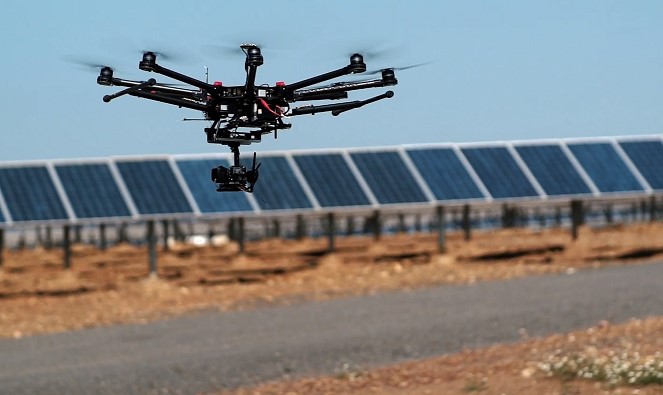
The DOCTOR-PV project will develop a drone-based predictive maintenance method for photovoltaic plants, using the most promising technologies.
The DOCTOR-PV project (Development of Optimized Tools for Predictive Operation and Maintenance of Photovoltaic Plants) is being carried out by a research consortium led by MAETEL, with the participation of Gas Natural Fenosa Engineering, Iberdrola Renovables, PARIVER, Visiona, the Public University of Navarre, the University of Valladolid and CIRCE.
The project aims to improve the performance of photovoltaic plants through a new predictive maintenance method that will use and combine the most promising techniques on the market in a pioneering way, enabling the early detection of anomalies and identification of faults in photovoltaic plants in a fully automated manner. The combination of these methodologies will allow better planning of operation and maintenance work, as well as anticipation of failures, reducing energy losses associated with malfunctioning and optimizing overall performance.
This project, file number RTC-2017-6712-3, has been funded by the Ministry of Science, Innovation and Universities – State Agency and co-financed by the European Union through the European Regional Development Fund (ERDF), with €1.1 million, over an implementation period of two and a half years (July 2018 – December 2021), within the RETOS-COLABORACION 2017 call, which supports cooperative projects between companies and research organizations with the aim of promoting technological development, innovation and high-quality research.
The project combines the most promising techniques related to predictive maintenance, condition-based maintenance of all plant elements and electroluminescence (EL) and infrared thermography (IRT) measurements, both combined and implemented on drones to carry out inspection tasks at the same time in a single flight, representing one of the major innovations of this R&D&I project.
Condition-based predictive maintenance will use “machine learning” methods to enable early detection of failures in the plant’s main components.